Use wire mesh or “gopher baskets” for voles and gophers
Make sure to use the appropriate size and depth
3. Use safe control methods
Use traps if needed — but use caution and call a professional
Something is tearing up your garden. Varmints! But what kind?
In most parts of California, the likely culprits are moles, voles, or pocket gophers. Controlling these pests may take time and continued effort, but once you accurately identify your pest, you can keep them under control using non-toxic methods.
MOLE, VOLE, OR GOPHER? HOW DO I KNOW?
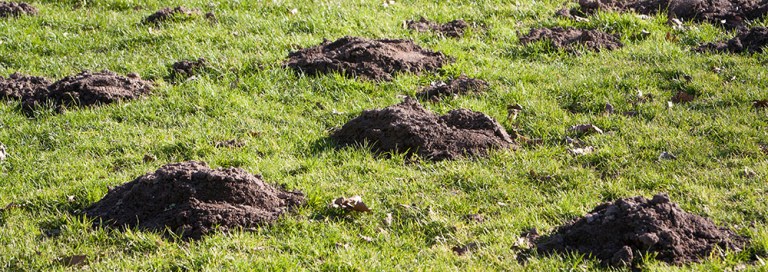
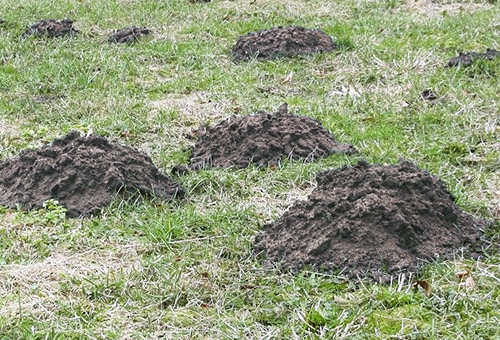
If you see cone-shaped mounds of soil or a network of raised tunnels, and your plants are not getting eaten, you likely have moles.
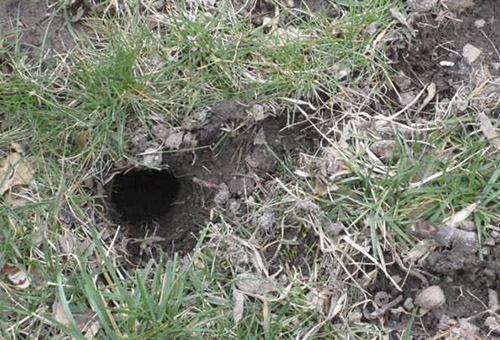
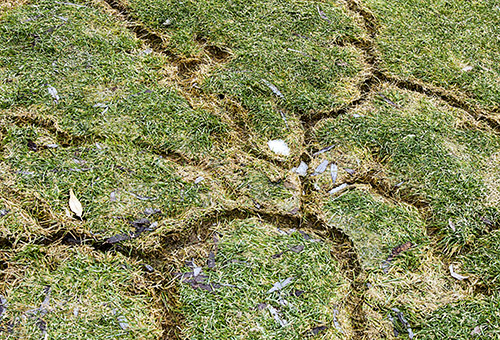
If you see a network of closed or partly exposed tunnels (runways) and a clean, golf ball-sized entrance hole to a tunnel, you likely have voles. Locate the runways by moving aside groundcover.
If you see a crescent-shaped mound of soil with a plugged opening, you likely have gophers. A gopher will plug any opening to its burrow system.
Voles are small and mouse-like, about 4 to 6 inches in body length
plus a short tail. Moles are about the same size, but have short dark
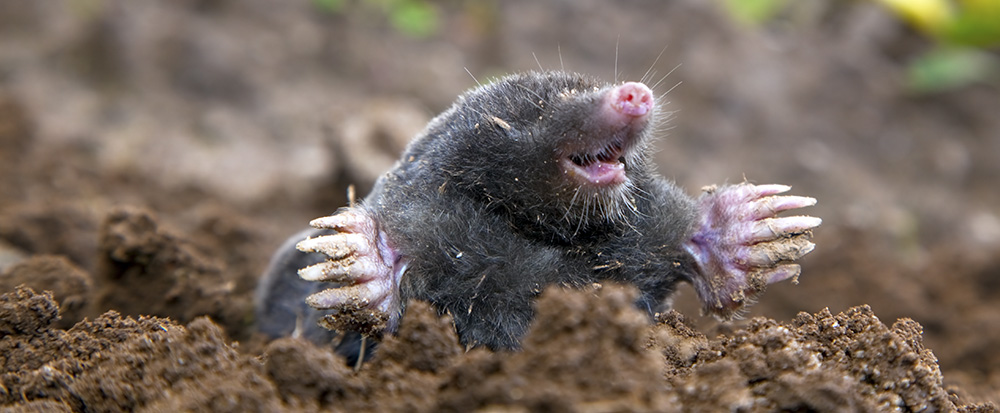
fur, no noticeable eyes or ears, and distinctive flat, wide front paws.
Gophers are the largest of the three, about 6 to 10 inches long with a
short tail and large front teeth.
Get to know your pest!
Moles
Moles (Scapanus species) are small mammals (4 to 7 inches long) that eat grubs, other insects, and earthworms. With oversized front claws, sensitive snouts, and poor eyesight, moles are adapted. They are terrific diggers. In a single day, a mole can crisscross a lawn with 150 feet of tunnels, and shallow feeding runs. Moles are most active after rain or irrigation when the soil is easy to work; they are less active during very hot or cold weather, or during drought. Their digging disturbs the soil and uproots plants, causing damage to gardens.
Mole hills: a mole heading for the surface will push soil straight up,
forming soil mounds that are cone- or volcano-shaped.
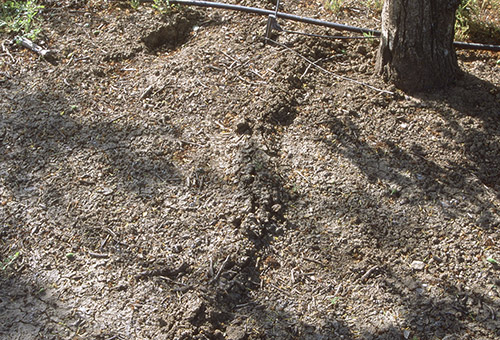
Moles make feeding tunnels or runways close to the surface.
Moles
Moles (Scapanus species) are small mammals (4 to 7 inches long) that eat grubs, other insects, and earthworms. With oversized front claws, sensitive snouts, and poor eyesight, moles are adapted to life underground. They are terrific diggers. In a single day, a mole can crisscross a lawn with 150 feet of tunnels. Moles are most active after rain or irrigation when the soil is easy to work; they are less active during very hot or cold weather, or during drought. Their digging disturbs the soil and uproots plants, causing damage to gardens.
Mole hills: a mole heading for the surface will push soil straight up,
forming soil mounds that are cone- or volcano-shaped.
Moles make feeding tunnels or runways close to the surface.
Voles
Voles(meadow mice) are rodents with short tails and round bodies. In California, we have six species of voles from the genus Microtus. The California vole (M. californicus) and the montane vole (M. montanus) are the most common garden pests in our state. Adult voles are 5 to 8 inches long, including the tail. Once you identify a vole problem, it’s important to get them under control quickly — vole populations can spike to several thousand per acre in a short time.
Voles are vegetarians. They feed on grasses, vegetables, herbaceous plants, bulbs, tubers, tree roots, and bark. Unlike moles and gophers, they’re not diggers, so they often take over abandoned gopher or mole burrows.
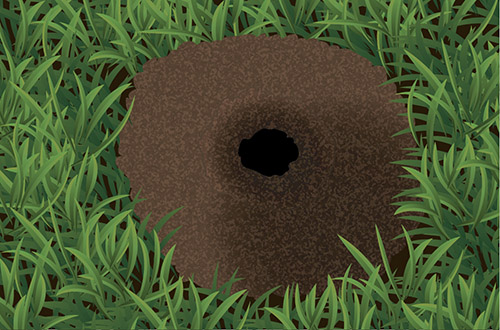
The openings of vole burrows are relatively smooth and round.
Vole runways are partly exposed and often covered with vegetation
Pocket Gophers
Pocket gophers (Thomomys species), commonly referred to as simply “gophers,” carry food and nesting material in furry cheek pouches, giving them their name. Gophers are larger than moles or voles — about 6 to 10 inches long. They have large yellow-orange front teeth and small eyes and ears. Like voles, they eat plants, preferring roots and the fleshy underground portion of plants. They’re very busy underground — a gopher’s burrow system can cover an area 200 to 2,000 feet square. A typical system includes feeding tunnels 6 to 12 inches below the surface, and nesting and food storage chambers as deep as 6 feet.
Mole mounds are cone- or volcano-shaped because moles tunnel
straight up.
Pocket gopher mounds are crescent- or horse shoe-shaped, because
gophers tunnel up at an angle. Gopher holes are always plugged.
Controlling Burrowing Critters
The Our Water Our World program doesn’t recommend poisons, fumigants, or incendiary devices to control moles, voles, or gophers.
Using barriers and traps are less-toxic, more humane, and more effective long-term than poisons or fumigants. Castor oil-based repellents may work temporarily but are not as effective as barriers or traps.
Barriers: Protect your plants from voles and gophers
Remove weeds and other plant material to help discourage voles, which are attracted to dense foliage where they can hide from owls, hawks, and other predators.
For voles, bury ¼-inch wire mesh 6 to 10 inches below the surface, extending 12 inches above ground around the perimeter of your garden. This prevents the animals from tunneling in. A cleared area outside the barrier provides extra protection.
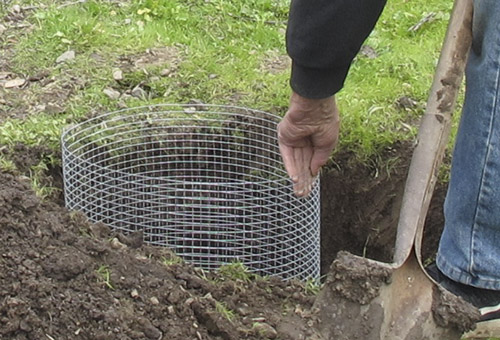
Planting in wire baskets keeps plants safe from voles, moles, and pocket gophers.
For gophers, install 1/2 to 3/4-inch wire mesh at least 2 feet deep with at least 1 foot extending above ground, bent away from the area you are protecting. At the bottom, bend 6 inches of mesh at a 90-degree angle away from the area you are protecting. This approach is not foolproof, though, as gophers are talented and motivated diggers.
Plant tender plants in wire “gopher baskets.” Be sure to choose a basket large enough to allow room for root growth, and leave a few inches of mesh above the ground.
For new raised planter beds, cover the entire bottom of the box with half-inch hardware cloth or gopher wire before adding soil. For existing raised beds, remove soil down to 14 to 18 inches and lay ¼-inch wire mesh across the entire bottom and up the inside walls of the bed. Secure with fencing nails.
Barriers: Protect your plants from voles and gophers
Remove weeds and other plant material to help discourage voles, which are attracted to dense foliage where they can hide from owls, hawks, and other predators.
For voles, bury ¼-inch wire mesh 6 to 10 inches below the surface, extending 12 inches above ground around the perimeter of your garden. This prevents the animals from tunneling in. A cleared area outside the barrier provides extra protection.
For gophers, install 1/2 to 3/4-inch wire mesh at least 2 feet deep with at least 1 foot extending above ground, bent away from the area you are protecting, At the bottom, bend 6 inches of mesh at a 90-degree engle away from the area you are protecting. This approach is not foolproof, though, as gophers are talented and motivated diggers.
Planting in wire baskets keeps plants safe from voles, moles, and pocket gophers.
Plant tender plants in wire “gopher baskets.” Be sure to choose a basket large enough to allow room for root growth, and leave a few inches of mesh above the ground.
For new raised planter beds, cover the entire bottom of the box with half-inch hardware cloth or gopher wire before adding soil. For existing raised beds, remove soil down to 14 to 18 inches and lay ¼-inch wire mesh across the entire bottom and up the inside walls of the bed. Secure with fencing nails.
Trapping moles, voles, and gophers
Call a professional if you plan to trap burrowing pests. Traps can be dangerous! They must be set properly and placed where they won’t harm children or pets. If you call a professional, be sure to ask them not to use poison baits or fumigants.
If you plan to set traps yourself, first identify the pest correctly and use a trap that is specific to moles, voles, and gophers. Be sure to follow the instructions on the label, in the packaging, or on the manufacturer’s website. To avoid serious injury, set traps in places where children or pets won’t disturb them or dig them up.
Many thanks to the University of California Statewide Integrated Pest Management Program for their excellent Pest Notes, from which we have borrowed much content!