Wash aphids off with a strong stream of water or wipe them off
Prune off heavily infested buds, stems, and leaves
Use insecticidal soap or horticultural oil
3. Control ants, too
Because ants prtect aphids:
Place a sticky barrier around the trunks of woody plants
Trim branches that would allow ants to avoid the barrier
Are those aphids on your plants?
Aphids are very small insects with soft, pear-shaped bodies, often found on young buds, stems, and the underside of leaves. They have long legs and antennae and some have wings. Aphids are usually green, but can be the same color as the plant they’re on.
Aphids aren't all bad!
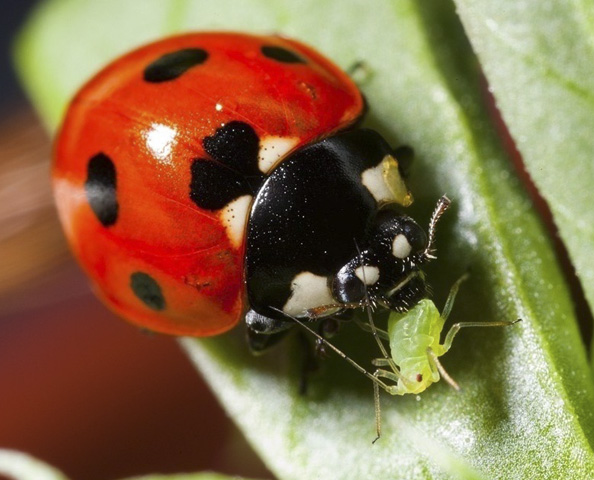
While a large infestation can stunt plant growth or distort leaves and flowers, a few aphids on your plants can make your garden healthier by attracting beneficial insects—good bugs that eat pests and pollinate your garden. Many beneficial spiders and insects (like ladybugs, green lacewings, and tiny non-stinging parasitoid wasps) will stay in your garden if there are aphids to eat.
Keep Aphids Away
Use organic fertilizers. Organic fertilizers result in ongoing, gradual plant growth rather than growth that happens all at once. Some aphids reproduce more quickly on plants with large amounts of new growth.
Don’t prune more than necessary. Pruning encourages tender new growth that attracts aphids. Prune according to the plant’s needs.
Use a mesh insect barrier to block out aphids and other pests while allowing air, light, and water to reach plants.
Attracting beneficial insects to your garden
Plant a wide variety of flowering plants. (See the Planting a Healthy Garden fact sheet in this series.) Flowers in your garden provide pollen and nectar — another food source for some aphid-eaters, including tiny wasps and lacewings—and will attract these helpful insects.
Buy beneficial insects like green lacewings or ladybugs, but wait until aphids have arrived.
Keep the ladybugs you buy from leaving your garden. Put them in the fridge for 24 hours. In the evening, mist the aphid-infested plants with water, and shake the ladybugs out of their container onto the wet leaves. In the morning, they will wake up gradually with the warmth of the sun, thirsty and hungry—and in ladybug fast-food heaven.
Control aphids
Wipe off or prune away large numbers of aphids from leaves and buds.
Use a strong stream of water to wash off both aphids and honeydew—a sweet, sticky substance produced by aphids (and other plant pests including whiteflies and scale). Do this early in the day so that the plants will dry before hot sun hits and burns the leaves.
Apply insecticidal soap, with the active ingredient potassium salts of fatty acids. (This is not dish detergent. Dish detergent can harm plants.)
Use horticultural oil spray to smother the aphids. Do not use horticultural oil when plants are wet or when temperatures are above 90º F or below freezing. Do not use on open blooms.
A row cover will keep aphids away from plants.
Control Ants, Too
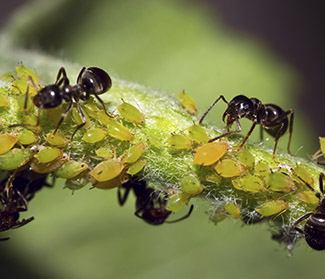
Ants are attracted by honeydew. If you see a lot of ants on plant stems, you likely also have an infestation of aphids or other honeydew-producing insect pests. Ants will actually protect aphids and other honeydew-producers from beneficial insects and other natural predators. Keeping ants away will help reduce the aphid population:
Paint a sticky barrier, such as Tanglefoot, around the trunks of woody plants, so that ants won’t be able to reach aphids on stems and leaves.
Prune any branches that touch walls, fences, or the ground so ants cannot get around the barrier.
Ants are attracted to the honeydew that aphids make.
Pesticides and Water Quality
Commonly used pesticides can be harmful to people and pets. They also pollute our water, air, and soil. While pesticides are used heavily in agriculture, more than half of California pesticide use is in urban and suburban areas—in and around our homes, schools, and businesses.
In our waters they poison birds, fish, and sensitive aquatic wildlife. In some locations, water contaminated with pesticides can migrate from creeks and surface waters into drinking water wells. We all need to do what we can to keep pesticides out of our creeks, streams, rivers, bays, and lakes.