
Controlling

Mosquitoes

Around Your Home

Controlling

Mosquitoes

Around Your Home

Controlling

Mosquitoes

Around Your Home

Contents

Download this factsheet

Mosquito CONTROL IS EASY AS 1-2-3!

1. Prevent

  • Remove standing water

  • Keep roof gutters clean

  • Keep swimming pool/hot tub filters running

  • Drain fountains or stock with mosquitofish

2. Keep them out

  • Install screens and patch holes

  • Minimize outdoor lighting near entry doors

  • Wear long sleeves and long pants as protective clothing

3. Choose a less-toxic product

  • Choose less-toxic insect repellants including picaridin, IR3535, and oil of lemon eucalyptus

  •  Apply Bacillus thurngiensis (Bti) larvicides in fountains, pools, and other standing water


There are many kinds of mosquitoes. Some bite during the day, while others bite at night. Only adult female mosquitoes bite — they need blood to produce eggs. Young mosquitoes (larvae) live in water and feed on microorganisms and organic matter. Just about any area or container that holds water for more than a few days can produce a large crop of mosquitoes. Your bites may be coming from mosquitoes you are raising in your own backyard.

Mosquitoes are part of the aquatic ecosystem, providing food for fish and other aquatic creatures. For humans, however, it’s a different story. In addition to their annoying buzzing and itchy bites, mosquitoes carry disease causing organisms, such as the West Nile virus, that can be serious, even fatal, to humans. Getting rid of mosquitoes and making sure they aren’t breeding around your home can help keep everyone safer— and keep you and your family from getting bitten.

Do not treat street gutters or storm drains with pesticides. Storm drains are often connected directly to creeks, rivers, and streams, and pesticides cause serious problems for aquatic life. Call your mosquito and vector control district if you suspect mosquitoes are breeding in the storm drains or catch basins in your neighborhood.

To find your local district, go to:
http://www.mvcac.org/resources/member-agencies

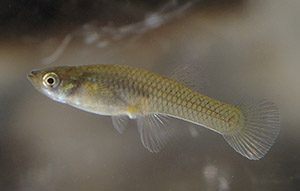
Mosquitofish

You can get free mosquitofish (Gambusia affinis) from your county mosquito and vector control district (www.mvcac.org). Mosquitofish are non-native predators of mosquito larvae and can be helpful in controlling mosquitoes in a backyard pond, pool, or water garden.

Mosquitofish
Mosquitofish
Mosquito Larvae
Mosquito Larvae

Less than three inches long when fully grown, mosquitofish commonly eat three times their weight in mosquito larvae a day. Their diet also includes zooplankton, beetles, mayflies, caddisflies, mites, and other invertebrates. However, too many mosquitofish can make a mosquito problem worse by eating other mosquito predators.

  • Mosquitofish are cannibalistic. Protect young fish in a backyard pond by providing rocks and plants for them to hide in.

  • Do not feed mosquitofish. Overfed fish may not feed on mosquitoes, and extra food in the water may cause the growth of bacteria that harm the fish.

  • Be sure to check with your water supplier before using tap water to fill your pond. Some tap water contains chloramine, which is toxic to mosquitofish. You must treat it first with a product that removes chlorine and chloramine, which is available in pet stores.

  • However, mosquitofish also feed on threatened and endangered species. DO NOT release them into creeks, streams, or any place that might overflow to a creek or stream.

Take Away Their Breeding Places

Mosquitoes can breed in any amount of standing water.

  • Make sure there is no standing water in containers around your home, including water in cans, plastic containers, potted plant saucers, buckets, garbage cans or lids, barrels, wheelbarrows, or any container that holds water for more than a few days. Empty the water and then either turn over, cover, throw away, or recycle containers.

  • Recycle tires or store them so they will not collect water. Tires are difficult to drain, and each one can produce thousands of mosquitoes.

  • Change water in birdbaths and outdoor pet water dishes every two or three days.

  • Tires collect water and are hard to drain, making them a perfect mosquito breeding place.

    Fix leaky outdoor faucets and sprinklers, and don’t overwater your yard.

  • Clear roof gutters so water drains. Mosquitoes will breed on wet leaves in standing water.

  • Don’t dump yard waste into street gutters, storm drains, or creeks. Mosquitoes can breed in clogged gutters and drains, and in stagnant water in creeks. Decaying plants provide food for large numbers of mosquito larvae.

  • Drain plastic wading pools or cover them tightly.

  • Keep swimming pool and hot tub filters running. Cover pools and tubs tightly. If you won’t be using your pool or hot tub for several weeks, dechlorinate the water and stock with mosquitofish. One pool or hot tub left to stagnate can breed enough mosquitoes to bother a whole neighborhood.

  • Drain fountains when they are not running. If the fountain is large enough, stock it with mosquitofish.

  • Fill tree holes with expanding foam used for insulation. The western tree hole mosquito is a primary vector of canine heartworm in California. Keep your dog’s heartworm medicine up to date.

  • Clean up leaf piles and plant cuttings that trap water from rain or watering.

Protect Yourself and Your Family from Mosquito Bites

  • Install screens on windows and doors and patch any holes.

  • Use a screen tent for outdoor eating (it will keep out yellowjackets, too).

  • Keep outside lighting to a minimum near entry doors, and keep those doors screened or close them at sunset.

  • Wear long sleeves and long pants when mosquitoes are biting.

  • When possible, sit next to an oscillating fan outdoors as mosquitos cannot fly at fan speeds.

  • When using insect repellents, the least toxic chemical options include:

    • Picaridin

    • IR3535

    • Oil of eucalyptus (also sold as p-Menthane-3,8-diol)

Mosquito Traps, Bug Zappers, and Other Non-Effective Controls

  • Propane-powered traps are not recommended by the American Mosquito Control Association. Although they attract mosquitoes with carbon dioxide and heat, they do not reduce the chance of being bitten. These devices can be very expensive and they only remove adult mosquitoes.

  • Don’t use electric bug zappers—they kill far more beneficial and neutral insects. Ultrasonic devices are also not effective.

  • Wristbands treated with insect repellent are not effective, because repellents protect only areas very close to where they are applied.

  • Products containing lavender or citronella are not scientifically shown to be effective.

  • Chlorine does not kill mosquitoes.

Less-toxic Controls

  • Bacillus thuringiensis subsp. israelensis (Bti) is the active ingredient in a number of mosquito control products that are used in water. Bti can be used in ponds and water gardens, birdbaths, fountains, pools, tree holes, and other standing water where mosquitoes lay eggs. It is safe for aquatic animals and targets only mosquitoes, black flies, and certain midges. Follow all label directions carefully. Apply in the spring when mosquito larvae are first seen and continue as recommended on the package.

Contact your local mosquito and vector control district (www.mvcac.org/resources/ member-agencies) if there is an uncontrolled mosquito source in your neighborhood, such as an abandoned pond or pool, or if you need assistance with a mosquito problem on your property. Most district services are free.

West Nile Virus

West Nile virus (WNV) is carried by mosquitoes and wild birds—especially crows, ravens, jays, and magpies—that have been bitten by mosquitoes. In humans, WNV can be serious or even fatal, although many people who are infected do not develop symptoms.

Some people with WNV disease will have mild flu-like symptoms (fever, headache, body aches, nausea, vomiting, and sometimes swollen lymph glands or a skin rash on the chest, stomach and back) that last for just a few days. People with mild symptoms usually get better on their own. If you have severe WNV symptoms, such as very bad headaches or confusion, seek medical attention immediately. If you are pregnant or breastfeeding and think you might have WNV disease, talk to your doctor.

If you find a dead bird—particularly a crow, raven, bluejay, or raptor—do not pick it up with your bare hands. File an online report about the bird at westnile.ca.gov/report or call toll-free 1-877-968-2473. Dead bird reports are important because they are usually the first indication that the virus is active in an area.

For more WNV information, go to http://www.westnile.ca.gov.

Don't Let Mosquitoes Breed Around Your Home